





Portable Ultrasound Machine Specs: The Numbers That Matter
- 2026-09-28
- 827
- Guangzhou Sonostar Technologies Co., Limited
Most clinics and primary-care facilities face the same problem when choosing a portable ultrasound machine: a crowded field of models and dense specification sheets, with little clarity on which numbers actually affect image quality or which probe fits their exams. The result is often overpaying for unused features, or buying an underpowered device that cannot deliver the clarity daily work demands. What most buyers actually need is straightforward — a way to verify the numbers and select a machine that images clearly, carries easily and lasts in service. Below is a side-by-side comparison of three representative SonoStar models using verified manufacturer data, followed by guidance on reading each figure.
Spec Comparison: Convex 8C vs Linear 9L vs High-Frequency 9N
| Specification | 8C (Convex) | 9L (Linear) | 9N (High-Frequency Linear) |
|---|---|---|---|
| Probe type | Electronic convex | Linear | Linear |
| Frequency (MHz) | 3.2 / 5.0 | 7.5 / 10 | 10 / 13.2 |
| Elements | 192 | 192 | 192 |
| Channels | 64 | 64 | 64 |
| Depth (mm) | 90–305, adjustable | 20–100 | 20–60 |
| Footprint / angle | R60 | 40 mm | 25 mm |
| Display modes | B/B-M/Color/PDI/PW | B/B-M/Color/PDI/PW | B/B-M/Color/PDI/PW |
| Grayscale | 256 levels | 256 levels | 256 levels |
| Battery | 2200 mAh (built-in) | 2200 mAh (replaceable) | 2200 mAh (replaceable) |
| Runtime | ~1.5 h; thick pack ~3 h | ~1.5 h, 2 packs included | ~1.5 h, 2 packs included |
| Dimensions (mm) | 140×55×20 | Same class as 9N | 156×60×20 |
| Weight | ~180 g | Same class as 9N | ~230 g |
| Wireless | 802.11n, 2.4/5 GHz, 450 Mbps | 802.11g, dual-band, 450 Mbps | 802.11g, dual-band, 450 Mbps |
| Storage | JPG / MP4 / DCM | JPG / MP4 / DCM | JPG / MP4 / DCM |
Elements and Channels: The Detail Floor
All three probes use 192 elements and 64 channels. Element count sets the number of transducer units forming the image; channel count sets how many signal paths are processed simultaneously. Higher values support finer detail and resolution — the hardware floor that separates a usable portable ultrasound machine from a merely viewable one.
Frequency and Depth: What You Can Examine
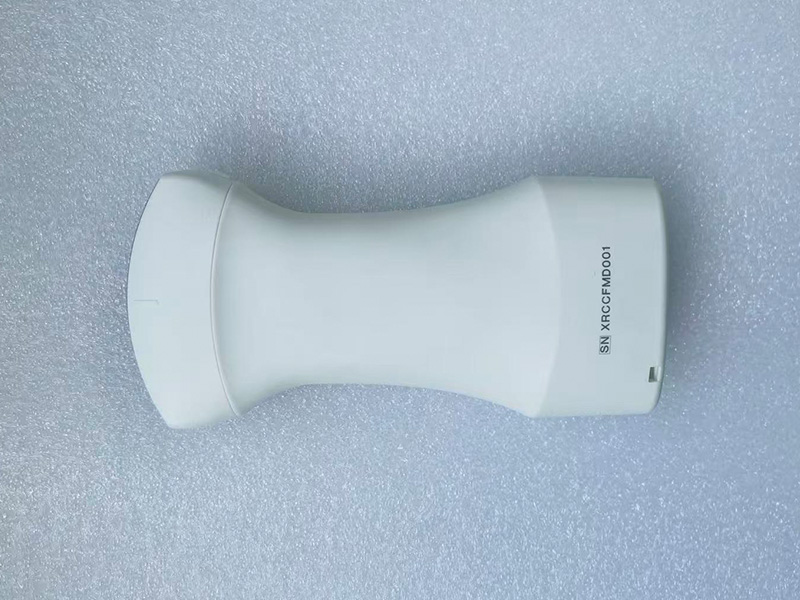
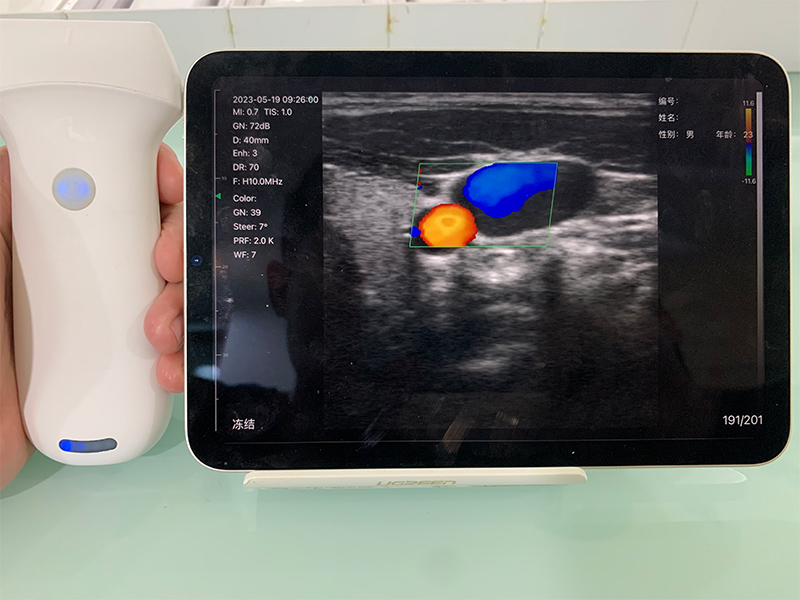
Frequency and depth trade against each other: higher frequencies resolve near-field structures but penetrate less. The convex 8C at 3.2/5.0 MHz reaches 305 mm for abdominal and deep work; the linear 9L at 7.5/10 MHz covers 20–100 mm for superficial and vascular exams; the high-frequency 9N at 10/13.2 MHz covers 20–60 mm for thyroid and small-parts detail. Define the target anatomy first, then read back the required frequency and depth.
Battery and Weight: True Portability
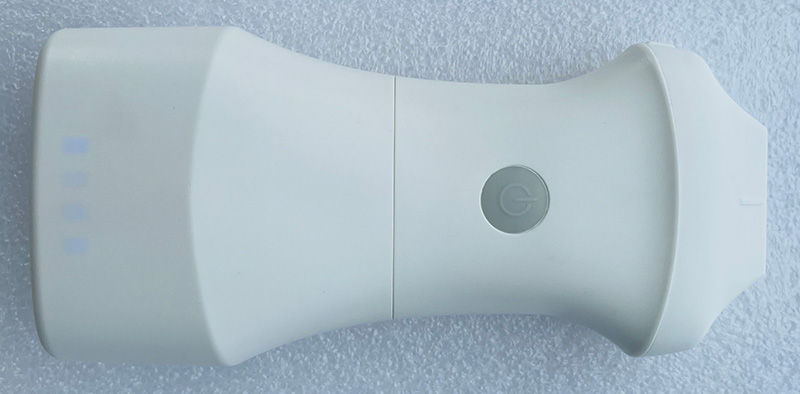
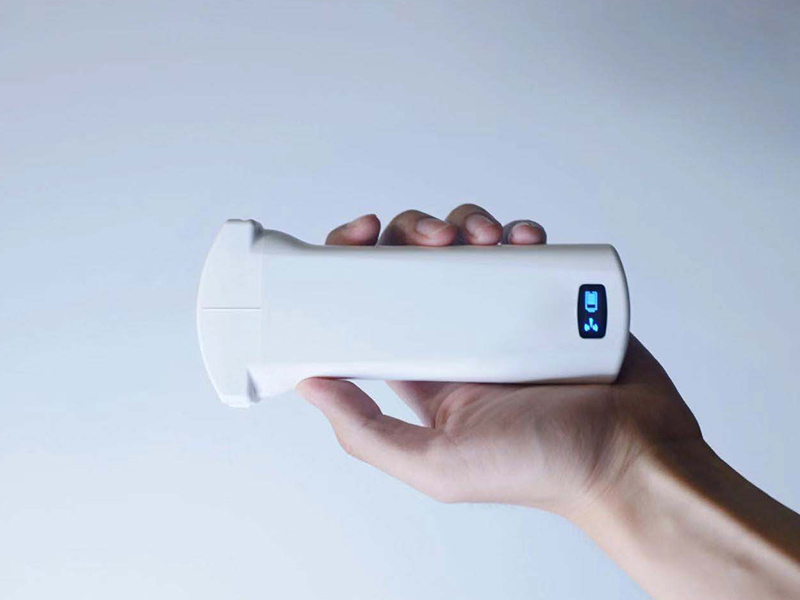
The 8C uses a built-in 2200 mAh battery for roughly 1.5 hours, extending to about 3 hours with the thickened pack. The 9-series 9L and 9N use replaceable 2200 mAh packs — two included, about 1.5 hours each — allowing hot-swap continuity during full-day rounds. At roughly 180 g (8C) and 230 g (9N), both are single-hand, pocket-carried devices. Note that replaceable batteries are a 9-series feature; the 8-series uses built-in cells.
Connectivity, Storage and Image Adjustment
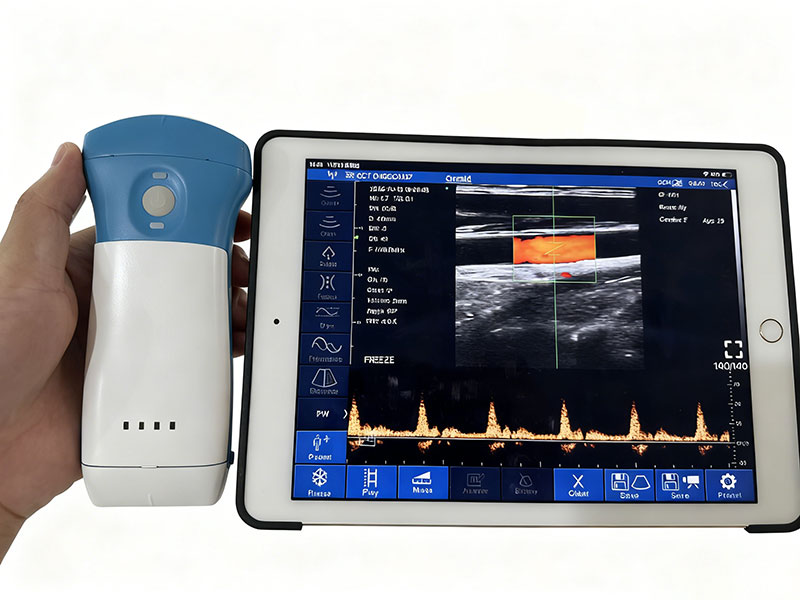
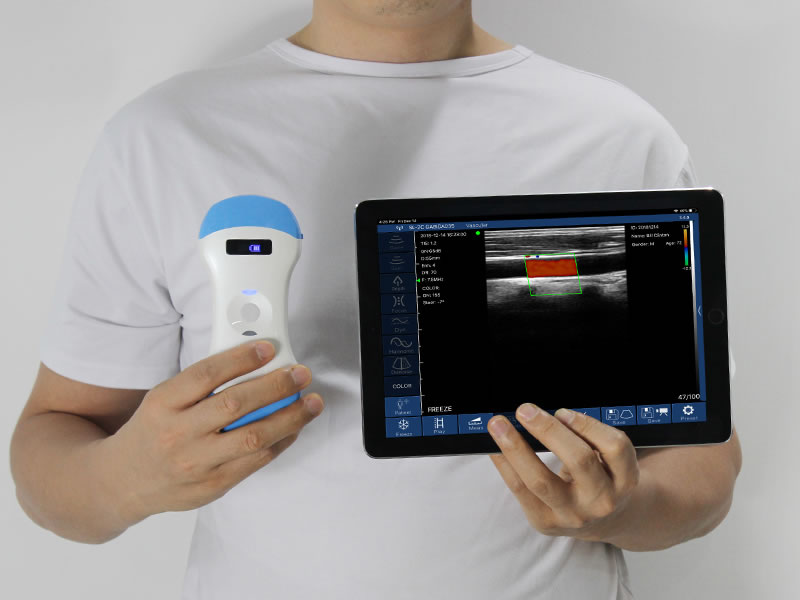
Each probe connects to iOS, Android and Windows devices over dual-band Wi-Fi at 450 Mbps and stores JPG, MP4 and DCM files — stills, cine loops and DICOM. On the adjustment side, the 8C offers 256 grayscale levels, five noise-reduction steps (0–4), 30–105 dB gain, a 40–110 dynamic range and cine playback of 100/200/500/1000 frames.
Matching Specs to Workload
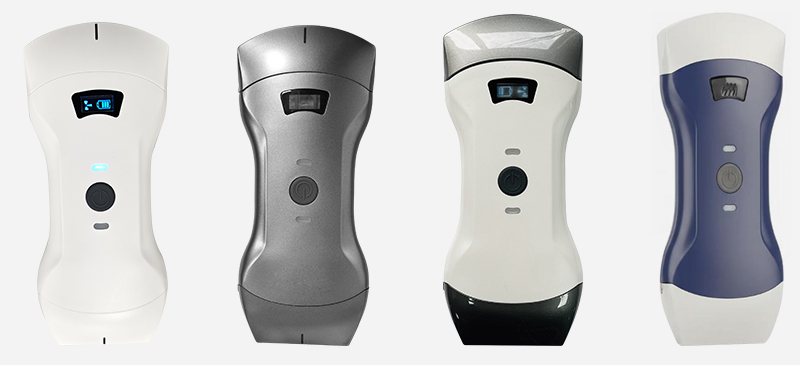
Deep abdominal work points to the convex 8C; superficial vascular and MSK exams to the linear 9L; thyroid and small-parts detail to the high-frequency 9N; multi-department users can evaluate a 3-in-1 probe to reduce the number of devices carried.
Frequently Asked Questions
How many elements should a portable ultrasound machine have?
The three reference probes all use 192 elements with 64 channels — a practical benchmark for diagnostic-grade detail in a pocket device.
What frequency and depth do I need?
Deep abdominal exams need lower frequencies (3.2–5 MHz, up to 305 mm); superficial and thyroid work need higher frequencies (7.5–13.2 MHz, 20–100 mm).
How long does the battery last?
Roughly 1.5 hours per 2200 mAh pack; the 8C thickened version reaches about 3 hours, and 9-series probes ship with two replaceable packs.
Which storage formats are supported?
JPG stills, MP4 cine loops and DCM (DICOM) files, saved on the connected phone, tablet or PC.
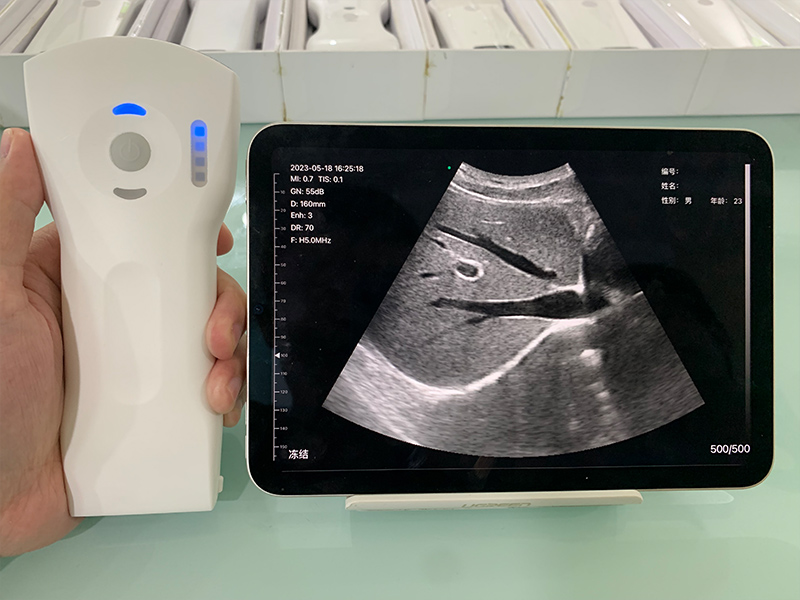
Match Verified Specs to Your Workload
Selecting a portable ultrasound machine comes down to matching verified numbers to the workload — frequency and depth for anatomy, elements and channels for detail, battery and weight for genuine portability. SonoStar, founded in 2011 and exporting to more than 100 countries, builds wireless probes on 192-element, 64-channel arrays across convex, linear and 3-in-1 types, paired with the SmartUSG app — a concrete benchmark for spec-driven evaluation.
References
SonoStar 8C convex palm doppler ultrasound scanner — official specifications (en.sonostarmed.com)
SonoStar 9N / 9L linear palm doppler ultrasound — official specifications (cn.sonostarmed.com)
Hand-Held Ultrasound Devices Compared with High-End Ultrasound Systems: A Systematic Review — PMC6628329

 Home
Home Product
 News
News Contact